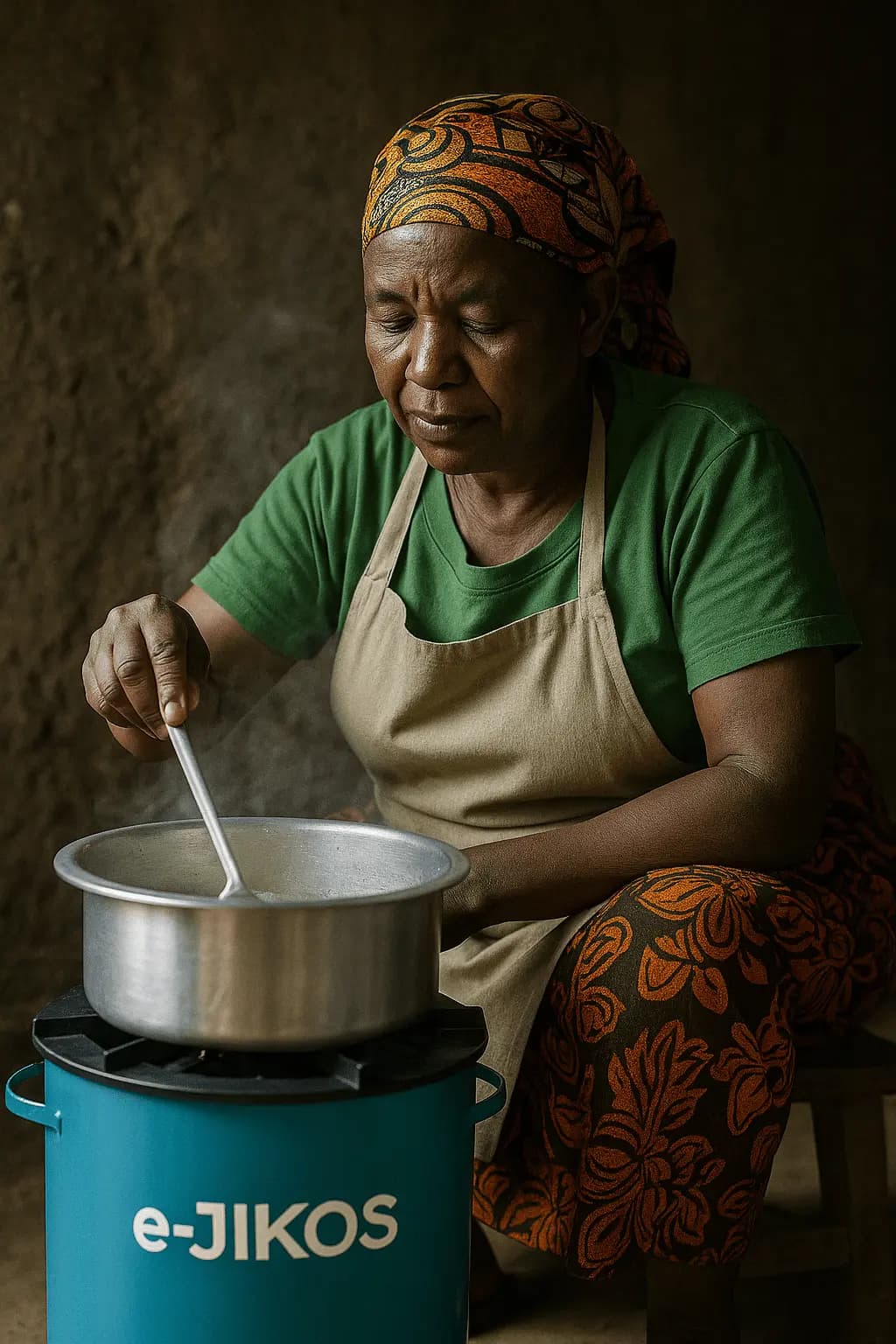
AMS-II.G v11: Tightened Rules for Clean Cooking Carbon Credits and What They Mean for Your Project
Njeri Gathari
Lead, Project Development, Validation & Verification
LinkedIn-ready angle: UNFCCC's updated clean cooking methodology introduces mandatory IoT monitoring for large programmes, tighter default emission factors, and a new stove usage survey protocol that fundamentally changes credit accounting.
UNFCCC's updated clean cooking methodology introduces mandatory IoT monitoring for large programmes, tighter default emission factors, and a new stove usage survey protocol that fundamentally changes credit accounting.
Clean cooking projects have long been the workhorse of Africa's voluntary carbon market, accessible to small developers, straightforward in their impact logic, and popular with corporate buyers seeking human health and gender co-benefits. AMS-II.G is the methodology that underpins most of them, applicable to efficient stoves and fuel switching programmes. Version 11, released by the UNFCCC Secretariat in Q4 2025, introduces changes significant enough that developers should treat it as a new methodology.
The Stove Usage Survey: A New Protocol
Prior versions of AMS-II.G allowed relatively flexible approaches to estimating the number of meals cooked on project stoves versus traditional stoves. V11 introduces a standardised stove usage survey protocol, the SUP-v1, that specifies sample size, stratification methodology, survey timing (pre-cooking, post-cooking, and recall), and data quality standards. Surveys must be conducted annually and the results directly feed into the usage fraction applied in credit calculations.
The practical consequence is that projects with high household turnover, mixed stove use, or inadequate distribution records will see their credited usage fraction decline. In our preliminary modelling for three existing AMS-II.G programmes in Kenya and Uganda, the transition to SUP-v1 reduces annual credit issuance by between 12% and 28% depending on programme design and baseline household composition.
“The SUP-v1 survey protocol is the most significant change in v11. If your credit volume was predicated on usage fractions estimated under older approaches, your financial model needs to be revisited before your next verification.”
, Faith Kamau, Supacare Methodology Team
IoT Monitoring: Mandatory Above 50,000 Stoves
V11 mandates IoT-based stove usage monitoring for programmes distributing more than 50,000 stoves. This requirement applies at the programme level, not the project level, so aggregated programmes that individually fall below the threshold but collectively exceed it must also comply. The accepted IoT monitoring approaches include thermocouple data loggers, power consumption sensors for electric cooking projects, and GPS-enabled cook event sensors.
IoT deployment adds upfront hardware cost (typically $8–15 per stove for a reliable sensor package) and ongoing data management infrastructure. However, programmes that invest in IoT infrastructure typically see credit insurance premiums decline and buyer confidence increase substantially, forward purchase agreements for IoT-monitored programmes are closing at $3–7 per tonne premium over survey-only programmes in the current market.
Regionalised Emission Factors for Sub-Saharan Africa
V11 introduces disaggregated baseline emission factors by country and fuel type for sub-Saharan Africa, replacing the regional averages of prior versions. The new factors are derived from updated national cooking energy surveys and reflect significant variation in wood fuel moisture content, energy density, and combustion efficiency across different African ecological zones. Projects in drier savanna regions (lower moisture content wood) will see baseline emission factors decline slightly; projects in humid forest zones will see increases.
Transition Requirement
All AMS-II.G projects must transition to v11 at their next scheduled verification after June 30, 2026. Projects with verifications scheduled before that date may complete them under v10, but the following verification must apply v11 requirements in full.
Recommended actions for programme operators:
- Commission a SUP-v1 pilot survey across 5% of households to model the usage fraction impact before your next verification
- For programmes above or approaching 50,000 stoves, begin IoT procurement and pilot deployment immediately, the supply chain for quality sensors in East Africa has a 6–9 month lead time
- Update your country-specific baseline emission factors using the v11 values and remodel your annual credit volume
- Review your offtake agreement pricing in light of the revised credit volume, if your margin was thin under v10, you may need to renegotiate
Share with your network
LinkedIn-ready angle: UNFCCC's updated clean cooking methodology introduces mandatory IoT monitoring for large programmes, tighter default emission factors, and a new stove usage survey protocol that fundamentally changes credit accounting.
Sources & further reading
- 01UNFCCC recognised carbon standard frameworks, AMS-II.G: Energy efficiency measures in thermal applications of non-renewable biomass (Version 11)
- 02Gold Standard, Methodology for Metered & Measured Energy Cooking Devices v1.0
- 03Gold Standard, TPDDTEC v4.0: Technologies and Practices to Displace Decentralised Thermal Energy Consumption
- 04WHO, Household air pollution and health, fact sheet
- 05Modern Energy Cooking Services (MECS) programme, Loughborough University
More from Carbon Markets & Policy
October 2026 · 8 min read
Why Distributing Cookstoves Is Not Enough: Building Credible Monitoring Evidence
Delivery records, household interviews, fuel tests and sensor data answer different questions. How project and field teams can preserve the evidence needed for a defensible clean-cooking monitoring system.
October 2026 · 7 min read
UNFCCC's New Cooking Methodologies: What Project Developers Need to Prepare
A practical comparison of the new household-cooking routes, with the actual SUM monitoring dates, the one unresolved cross-reference, and what developers should plan for.
Work With Us
Speak to the team behind this analysis.